Email signatures seem like a small detail, until they have to be created and maintained for an entire company.
At Dolf Technologies, each employee needed a personalized email signature that followed the company’s approved visual identity. Managing those signatures manually meant repeating the same work whenever a new employee joined, information changed, or the signature design itself was updated.
I wanted to make that process simpler.
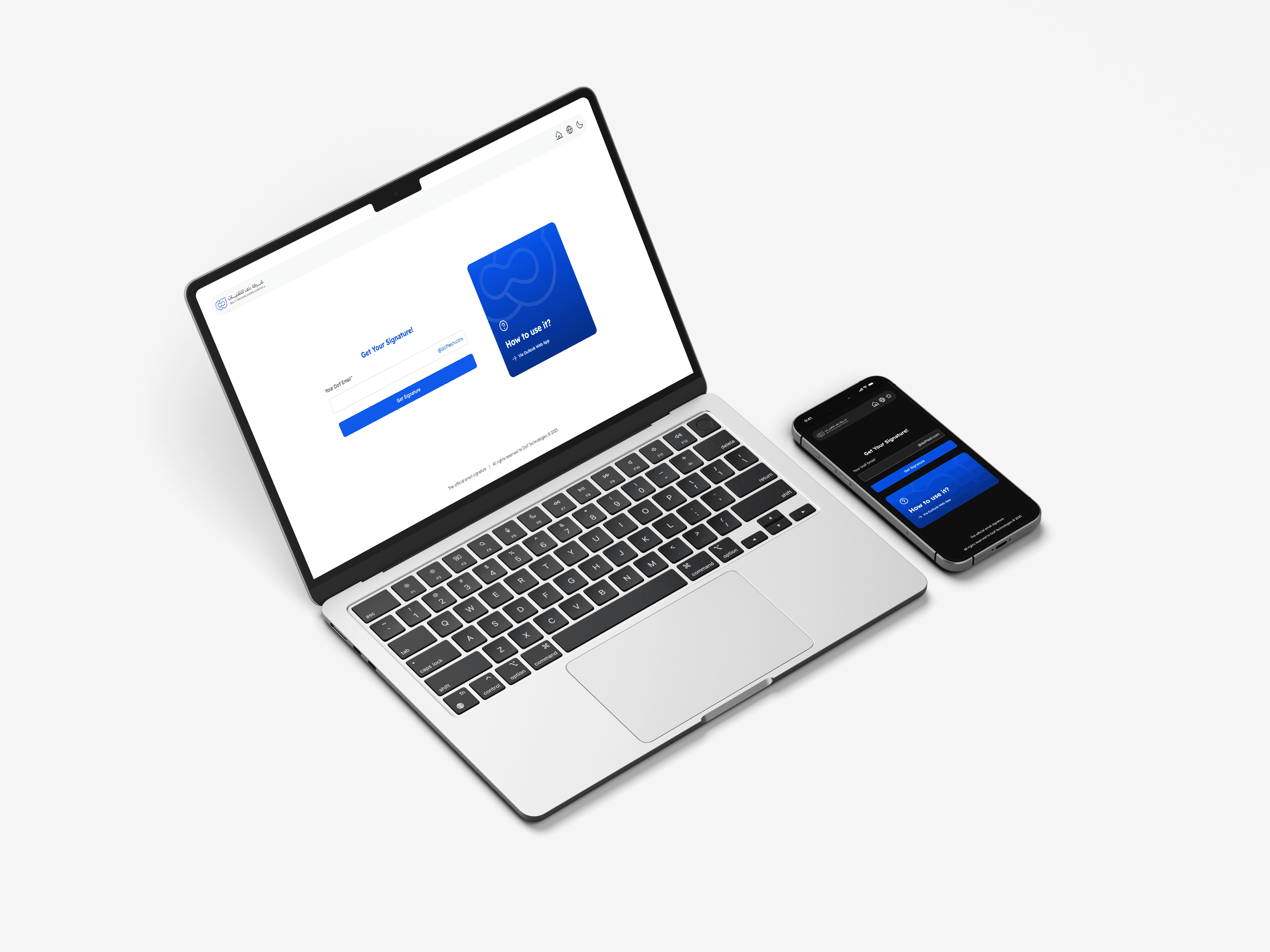
So I designed and built Dolf Signature Generator, an internal web application that centralizes employee information and the email signature template in one place.
Instead of preparing a separate signature manually for every employee, the system allows the employee list to be managed centrally, while the signature design can also be updated independently when needed.
For employees, the experience is intentionally simple: they can find their information using their work email, preview their personalized signature, and copy it directly for use in their email client.
One source, many personalized signatures
The tool separates two things that previously had to be handled together:
- Employee data, such as name, position, email, phone number, and branch.
- Signature design, the shared visual template that represents the company.
The system combines both automatically when a signature is requested.
This means employee information can be added or updated without recreating the design, while future changes to the signature style can be managed centrally instead of rebuilding every employee’s signature individually.
I also created administrative controls for managing employee records and signature settings, making the tool easier to maintain internally as the team changes over time.
Designing beyond the interface
One of the interesting challenges was that an email signature is not the same as a normal webpage.
The generated signature needed to remain usable when copied into email clients, where HTML and CSS support can be much more limited than in modern browsers. This meant thinking not only about how the signature looked inside the application, but also about how it behaved after leaving it.
The final tool became a small internal utility, but one that removed repetitive work and gave employees a much easier way to access a consistent, personalized company signature.
For me, it was another reminder that useful digital solutions do not always need to be large. Sometimes the value is simply in noticing a recurring task and making it easier for everyone involved.