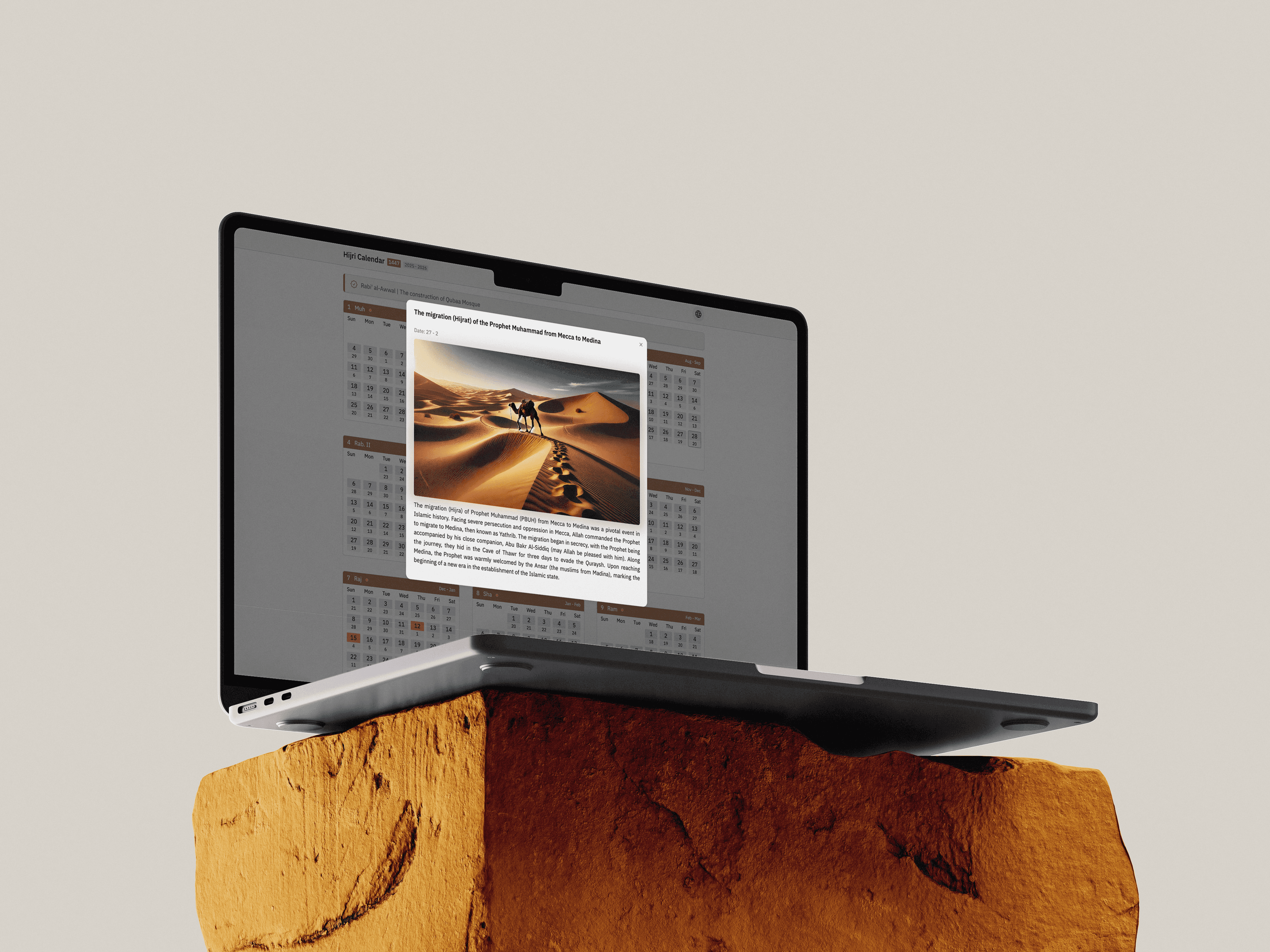
This project started with a simple idea: what if a Hijri calendar could offer more than dates?
I wanted to create a digital calendar that made the Hijri year easier to explore while also giving some of its dates more context through significant historical events.
The result was a bilingual web experience that presents the Hijri year in a familiar calendar format, alongside the corresponding Gregorian dates. Selected dates are connected to historical events that can be opened and explored without leaving the calendar.
Adding context to the calendar
Rather than treating historical events as a separate collection of information, I wanted them to feel naturally connected to the dates themselves.
When an event is associated with a date, the user can explore its details directly from the calendar. I also added a short guided tour to help first-time visitors understand the main interactive elements without making the interface feel complicated.
The experience was designed in both Arabic and English, allowing the same calendar to work naturally in either language.
From a digital idea to something shareable
I also wanted the project to exist beyond the browser.
So I created a small printed card with a QR code that takes people directly to the digital calendar, a simple way to turn a web project into something tangible that could be shared with others.
That small detail became one of my favorite parts of the project. It connected the physical and digital experiences without adding complexity.
Projects like this are a reminder of why I enjoy building small ideas. They give me the freedom to combine design, technology, content, and curiosity around one simple question: how can this be made a little more useful and engaging?
Explore the Hijri Calendar (opens in a new tab)